
CPHI India 2026

CPHI India 2026 CPHI India 2026 IICC (Yashobhoomi), Dwarka 23-25 November 2026 New Delhi, India Stand: 2D25 VENUE IICC (Yashobhoomi), Dwarka, New Delhi
CPHI Italy 2026

CPHI Italy 2026 CPHI Italy 2026 Fiera Milano, Italy 06-08 Oct 2026 Milan, Italy VENUE Fiera Milano, Milan, Italy
CPHI Korea 2026

CPHI Korea 2026 CPHI Korea 2026 COEX, Seoul, Korea 25 – 27 August 2026 COEX, Seoul, Korea Stand: E1.1B21 VENUE COEX, Seoul, Korea
CPHI Thailand 2026

CPHI Thailand 2026 CPHI Thailand 2026 Thailand 08-10 July 2026 Queen Sirkit National Convention Center(QSNCC) VENUE Queen Sirkit National Convention Center(QSNCC)
CPHI & PMEC China
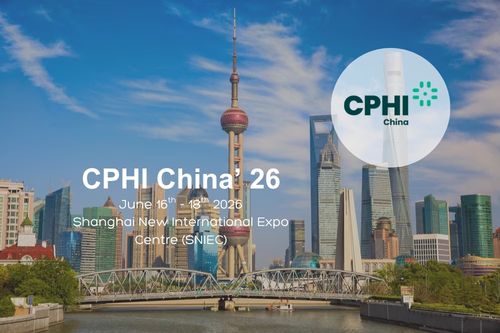
CPHI & PMEC China CPHI & PMEC China Shanghai, China 16-18 June 2026 Shanghai, China VENUE Shanghai New International Expo Centre (SNIEC)
From Volume to Value: How AI is Revolutionizing Indian Pharmaceuticals in 2026
From Volume to Value: How AI is Revolutionizing Indian Pharmaceuticals in 2026 For decades, India has been a global leader in generic drug production. However, as of 2026, a seismic shift is occurring. The integration of Artificial Intelligence (AI) is moving the Indian pharmaceutical industry beyond manufacturing into the high-stakes world of innovative drug discovery and precision medicine. Here is how AI is fundamentally reshaping the Indian pharma landscape. 1. Accelerating Drug Discovery (Years to Weeks) Traditionally, bringing a new drug to market took over a decade and cost billions. Leading domestic manufacturers are now leveraging AI to shorten this window significantly: Predictive Modeling: AI algorithms analyze molecular structures to predict how drug candidates will behave, eliminating “dud” compounds before they ever enter a lab. Repurposing Medicines: AI is being used to find new uses for existing, approved drugs—a move that saved thousands of lives during recent health crises and continues to lower R&D costs. 2. The Rise of “Pharma 4.0” in Manufacturing India’s manufacturing prowess is getting a digital upgrade. AI-driven Smart Factories are now the standard for maintaining stringent global compliance: Predictive Maintenance AI sensors on production lines predict machine failures before they happen, preventing costly downtime and batch wastage. Quality Control Computer vision systems now inspect tablets and packaging with 99.9% accuracy, identifying micro-cracks or coating defects that the human eye might miss. 3. Strengthening the Supply Chain & Cold Chain India’s geographic diversity makes logistics a challenge. AI is solving the “last-mile” problem, especially for temperature-sensitive biologics and vaccines: Demand Sensing: AI models analyze market trends and disease outbreaks to predict where medicine will be needed most, reducing stockouts by up to 30%. Anti-Counterfeiting: By combining AI with digital tracking, manufacturers can now monitor a drug’s journey from the factory to the rural clinic, ensuring patients receive authentic medication. 4. Strategic National Frameworks The Indian government has played a pivotal role in this transformation by launching landmark initiatives designed to foster innovation: National AI Frameworks: New strategies ensure that AI adoption across the healthcare sector is ethical, transparent, and patient-centric. Validation Platforms: Centralized platforms now allow for the benchmarking and validation of Health AI solutions, allowing startups and established firms to test innovations against real-world data safely. “AI is not just a tool for efficiency; it is the engine that will drive India’s transition from a generics leader to a global innovation powerhouse.” — Industry Insight, India Pharma 2026 The Road Ahead As we look toward the rest of 2026, the synergy between India’s massive data pools and AI computational power is creating a new model of R&D. By lowering the cost of innovation, the industry is making life-saving treatments not just available, but affordable for the entire world. Recent Posts All Posts Blog Event Role of Active Pharmaceuticals from India in Global Market Value of Pharmaceuticals Sector in India Pharmaceutical Export Destinations Global API Exports: A Decade of Resilience and Transformation (2016–2026) Contact Us +91 22 25004462 enquiry@atman.net.in
Global API Exports: A Decade of Resilience and Transformation (2016–2026)
Global API Exports: A Decade of Resilience and Transformation (2016–2026) The Active Pharmaceutical Ingredient (API) market is the bedrock of global healthcare. Over the last ten years, the landscape of API exports has shifted from a centralized, cost-focused model to a diversified, technology-driven powerhouse. As of 2026, the global API market has surpassed $260 billion, driven by a decade of unprecedented geopolitical shifts, regulatory tightening, and the rise of “Pharma 4.0.” 1. The 10-Year Evolution: From Concentration to Diversification A decade ago, the global supply of APIs was heavily concentrated in a few manufacturing hubs. Today, the “China + 1” strategy has matured into a multi-polar export model. However, the real story lies in the trajectory. Driven by a surge in pharmaceutical exports and complex drug development, the industry is on a firm path to reach $130 billion by 2030. This 10–12% annual growth is fuelled by: 2016–2019: The era of cost-optimization. Exports were primarily driven by large-scale synthetic manufacturing with a heavy focus on high-volume generics. 2020–2022: The Great Disruption. The pandemic exposed the vulnerabilities of “just-in-time” supply chains, leading to a global push for localized manufacturing and “friend-shoring.” 2023–2026: The Rise of Strategic Autonomy. Countries like India have aggressively scaled their export capabilities through initiatives like the Production Linked Incentive (PLI) scheme, transitioning from 15% of the world’s supply to a dominant force in high-value, complex molecules. 2. Key Drivers of API Export Growth in 2026 What makes the current export market different from that of 2016? Biotech and Biologics The fastest-growing segment is no longer simple chemical synthesis. High-potency APIs (HPAPIs) and biotech-derived ingredients now command a premium in international markets. Contract Development (CDMOs) Global pharmaceutical companies are increasingly outsourcing API development. The Indian CRDMO industry, for instance, is projected to grow at nearly 16% CAGR, doubling its value by 2028. Green Chemistry Exporting to the EU and US now requires meeting strict sustainability standards. Modern API exporters are adopting “Green Chemistry” to reduce solvent waste and carbon footprints, a prerequisite for top-tier international contracts. 3. Overcoming Regulatory Hurdles Exporting APIs worldwide is a game of compliance. The last decade has seen a harmonization of global standards (ICH guidelines), but challenges remain: Stringent AuditsThe USFDA and EMA have intensified field inspections. Success in the export market now depends on digital quality management systems that offer real-time transparency. Supply Chain Transparency: In 2026, traceability is non-negotiable. Exporters are utilizing blockchain and AI to provide “Track and Trace” capabilities for every drum of raw material shipped across borders. 4. Future Outlook: What’s Next for Global Trade? The next five years will see a further surge in demand for ingredients related to Cardiovascular health, Oncology, and Diabetes, as global populations age. We are also seeing a rapid expansion into emerging markets—specifically Africa, Latin America, and Southeast Asia—where the demand for affordable, high-quality generics is booming. Conclusion: The New Era of API Sourcing The progression of the last ten years has taught us that reliability is the new currency. For pharmaceutical companies looking to source active ingredients in 2026, the focus has moved beyond price to encompass sustainability, digital integration, and regulatory resilience. Recent Posts All Posts Blog Event Role of Active Pharmaceuticals from India in Global Market Value of Pharmaceuticals Sector in India Pharmaceutical Export Destinations From Volume to Value: How AI is Revolutionizing Indian Pharmaceuticals in 2026 Contact Us +91 22 25004462 enquiry@atman.net.in
The Future of Global Health
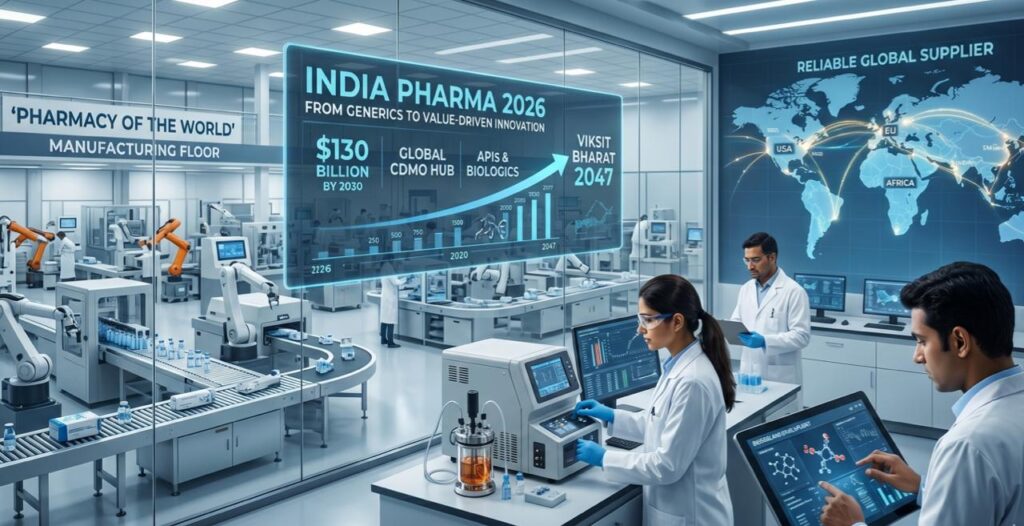
The Future of Global Health The Future of Global Health: Why the Value of Pharmaceuticals in India is Skyrocketing For decades, the global healthcare narrative had a predictable chapter: if you needed high-quality medicine at a fraction of the cost, you looked to India. But as we move through 2026, the Indian pharmaceutical industry is rewriting the script. The “Pharmacy of the World” is undergoing a profound metamorphosis. India isn’t just maintaining its status as the 3rd largest producer of pharmaceuticals by volume—supplying 20% of global generic drugs and 60% of the world’s vaccines – it is fundamentally pivoting. We are witnessing the rise of “Pharmacy of the World 2.0,” shifting from high-volume imitation to high-value biopharmaceutical innovation. 1. Market Analysis: A $130 Billion Pharmaceutical Vision The economic footprint of the Indian pharma sector has never been more formidable. As of 2026, the market valuation is approximately $65–70 billion. However, the real story lies in the trajectory. Driven by a surge in pharmaceutical exports and complex drug development, the industry is on a firm path to reach $130 billion by 2030. This 10–12% annual growth is fuelled by: Global Supply Chain Resilience: India’s emergence as a reliable CDMO (Contract Development and Manufacturing Organization) partner. Chronic Disease Management: Meeting the domestic and global demand for advanced oncology, cardiology, and diabetes treatments. 2. The Shift to Biologics and Active Pharmaceutical Ingredients (API) The “meat” of this transformation is India’s ascent up the value chain, specifically in the production of Active Pharmaceutical Ingredients (APIs) and complex biologics. The Shift to Biologics and Active Pharmaceutical Ingredients (API) A cornerstone of the 2026 Union Budget was the ₹10,000 crore Biopharma Shakti Initiative. This fund propels India into a leadership position in Biosimilars—highly complex biological medicines that represent the next frontier of medical science. Dominating the API Market and the “Patent Cliff” March 2026 saw a historic “patent cliff” for blockbuster drugs like Semaglutide. Indian pharmaceutical manufacturers were ready, launching over 50 generic versions and dropping prices by 50–70%. By strengthening the local production of Active Pharmaceutical Ingredients (API), India has ensured that global drug shortages are a thing of the past. Beyond Tablets: Complex Generics & Injectables The industry is moving toward Complex Generics, mastering difficult-to-make formulations like specialized injectables, transdermal patches, and metered-dose inhalers, which offer significantly higher profit margins. 3. Policy Catalysts: PLI Schemes and Digital Health Why is this happening now? The government’s aggressive policy ecosystem is the primary driver: API Self-Reliance: Through Production Linked Incentive (PLI) schemes, India has reduced its dependence on external sources for critical Active Pharmaceutical Ingredients (APIs) and Key Starting Materials (KSMs). Clinical Research & Drug Discovery: With over 1,000 accredited sites, India is now a top-tier destination for clinical trials and R&D. AI in Pharmaceuticals: In 2026, AI-driven drug discovery is standard practice, cutting research timelines and costs for pharmaceutical companies in India. 4. Economic Impact: The CDMO Boom and GCCs The value of pharmaceuticals in India is also measured in its industrial evolution: The GCC Boom: India now hosts over 100 Global Capability Centres (GCCs) for pharma giants, where high-skilled scientists lead global R&D. CDMO Leadership: Global companies are increasingly choosing Indian firms as their Contract Development and Manufacturing Organization (CDMO) of choice due to high quality-compliance and cost-efficiency. Affordability: The Jan Aushadhi scheme remains the gold standard for providing quality generic medicines at 50–90% lower costs. 5. Conclusion: Investing in India’s Pharma Excellence In 2026, the value proposition of the Indian pharmaceutical industry is defined by three pillars: Resilience, Innovation, and Global Trust. As we look toward Viksit Bharat 2047, India has proven it can do more than manufacture at scale. By becoming a powerhouse for APIs, Biosimilars, and CDMO services, India is ensuring the future of global healthcare is both affordable and pioneering. Recent Posts All Posts Blog Event Role of Active Pharmaceuticals from India in Global Market Value of Pharmaceuticals Sector in India Pharmaceutical Export Destinations Global API Exports: A Decade of Resilience and Transformation (2016–2026) From Volume to Value: How AI is Revolutionizing Indian Pharmaceuticals in 2026 Contact Us +91 22 25004462 enquiry@atman.net.in
Pharmaceutical Export Destinations
Pharmaceutical Export Destinations Export Destinations India exports pharmaceutical products to North America, Africa, the EU, ASEAN, Latin America & Caribbean (LAC), the Middle East, Asia, CIS, and other European regions. Nearly two-thirds of India’s exports go to NAFTA, Europe, and Africa. The top five export destinations for Indian Pharma Industry in 2022-23 were the USA, Belgium, South Africa, the UK, and Brazil. The US, Belgium, and South Africa were among the largest importers from India at a share of 29.72%, 2.82%, and 2.59%, respectively during 2022-23. India’s exports of pharma products to these countries in FY23 were USA with US$ 7.54 billion, Belgium with US$ 714.92 million, South Africa with US$ 657.0 million, the UK with US$ 647.68 million, and Brazil with US$ 642.67 million. India’s pharma exports to the USA in value grew at a CAGR of 6.18% over the last year. Additionally, for Belgium and South Africa, it grew at a CAGR of 59.2%, and 7.23%, respectively over the same period. As per the latest industry data of the USFDA, market authorizations granted to Indian formulations companies with USFDA approvals stood at 6,316, which is highest in comparison to any other country as of April 2023. A total of 410 Type II DMFs were submitted in H1 2023 as opposed to 350 in H1 2022, marking an increase of 17 percent. Additionally, the number of DMFs (Type ii Active) filed by the Indian firms till January 2023 stood at 4,505. USFDA inspections were not conducted during the last couple of years due to the COVID-19 pandemic, however, the inspections have started happening now and are expected to further increase Indian exports to the USA. Recent Posts All Posts Blog Event Role of Active Pharmaceuticals from India in Global Market Value of Pharmaceuticals Sector in India India API’s Exports Contact Us +91 22 25004462 enquiry@atman.net.in
India API’s Exports

India API’s Exports India Emerges as a Global Powerhouse in API’s Exports India has emerged as a global leader in the export of Active Pharmaceutical Ingredients (API’s), playing a pivotal role in ensuring the availability of essential medicines worldwide. The country’s robust pharmaceutical industry, coupled with its cost-competitive advantages, has made it a preferred destination for API’s manufacturing and supply. India’s API’s Export Landscape India’s API’s exports have witnessed a remarkable growth trajectory over the past decade. In 2021-22, the country exported Bulk Drugs/Drug Intermediates worth Rs. 33,320 crore (approximately USD 4.2 billion), accounting for a significant share of the global API’s market. This growth is attributed to several factors, including: Strong manufacturing capabilities: India possesses a strong and experienced pharmaceutical manufacturing base, with a well-established network of API’s producers. Cost competitiveness: India offers cost-competitive production advantages, making it an attractive destination for API’s manufacturing compared to other regions. Regulatory compliance: India’s pharmaceutical industry adheres to stringent regulatory standards, ensuring that exported API’s meet international quality and safety requirements. Key Export Destinations India’s API’s exports are spread across various regions, with major markets including: United States : The US is the largest importer of Indian API’s, accounting for a significant portion of the country’s total API’s exports. Europe : European countries, including Germany, Italy, and the United Kingdom, are major importers of Indian API’s. Africa : India is a key supplier of API’s to African countries, contributing to the continent’s access to essential medicines. Impact on Global Healthcare India’s role as a leading API’s exporter has a profound impact on global healthcare. The country’s ability to supply high-quality API’s at competitive prices ensures that essential medicines are accessible to a wider population, particularly in developing countries. This contribution to global health is particularly significant in the context of infectious diseases and chronic conditions that require long-term treatment. Future Prospects India’s API’s export sector is expected to continue its growth trajectory in the coming years. Factors driving this growth include: Rising demand for generic medicines : The increasing demand for generic medicines globally is expected to boost the demand for Indian API’s. Expanding manufacturing capacities : Indian pharmaceutical companies are expanding their manufacturing capacities to cater to the growing demand for API’s. Government initiatives : The Indian government is actively supporting the API’s sector through various initiatives aimed at enhancing competitiveness and innovation. In conclusion, India’s position as a global leader in API’s exports is firmly established. The country’s strong manufacturing capabilities, cost competitiveness, and regulatory compliance have made it a reliable supplier of essential API’s to the world. As demand for generic medicines continues to grow, India’s role in ensuring global access to quality and affordable medicines is expected to expand further. Recent Posts All Posts Blog Event Role of Active Pharmaceuticals from India in Global Market Value of Pharmaceuticals Sector in India Pharmaceutical Export Destinations Contact Us +91 22 25004462 enquiry@atman.net.in